Custom Restaurant Furniture: Sofa Design for Relaxed Restaurant Lounges
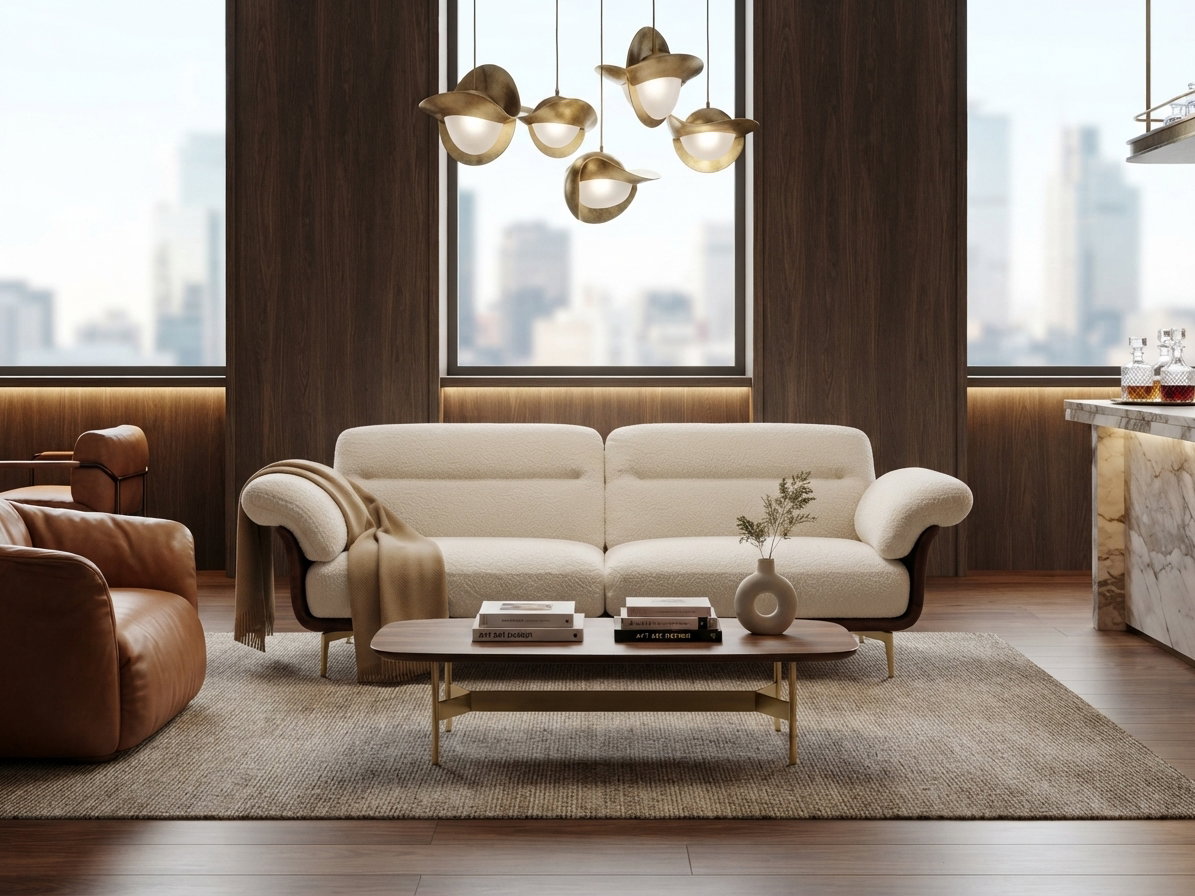
By Allline Hospitality & Interiors | Custom Furniture Manufacturer in Foshan, China
See Our Factory Capabilities →
A restaurant lounge is where the dining experience begins. It is where guests wait for a table, enjoy a drink at the bar, or linger after a meal. The furniture needs to balance comfort, visual character, and the practical demands of hospitality use. A custom furniture manufacturer allows designers and developers to adjust dimensions, materials, finishes, and upholstery to suit the space rather than relying on standard pieces. This article explores how a relaxed restaurant lounge can be designed around a custom three-seat sofa with a dark wood frame and cream bouclé upholstery.
Defining the Lounge Zone Within a Restaurant
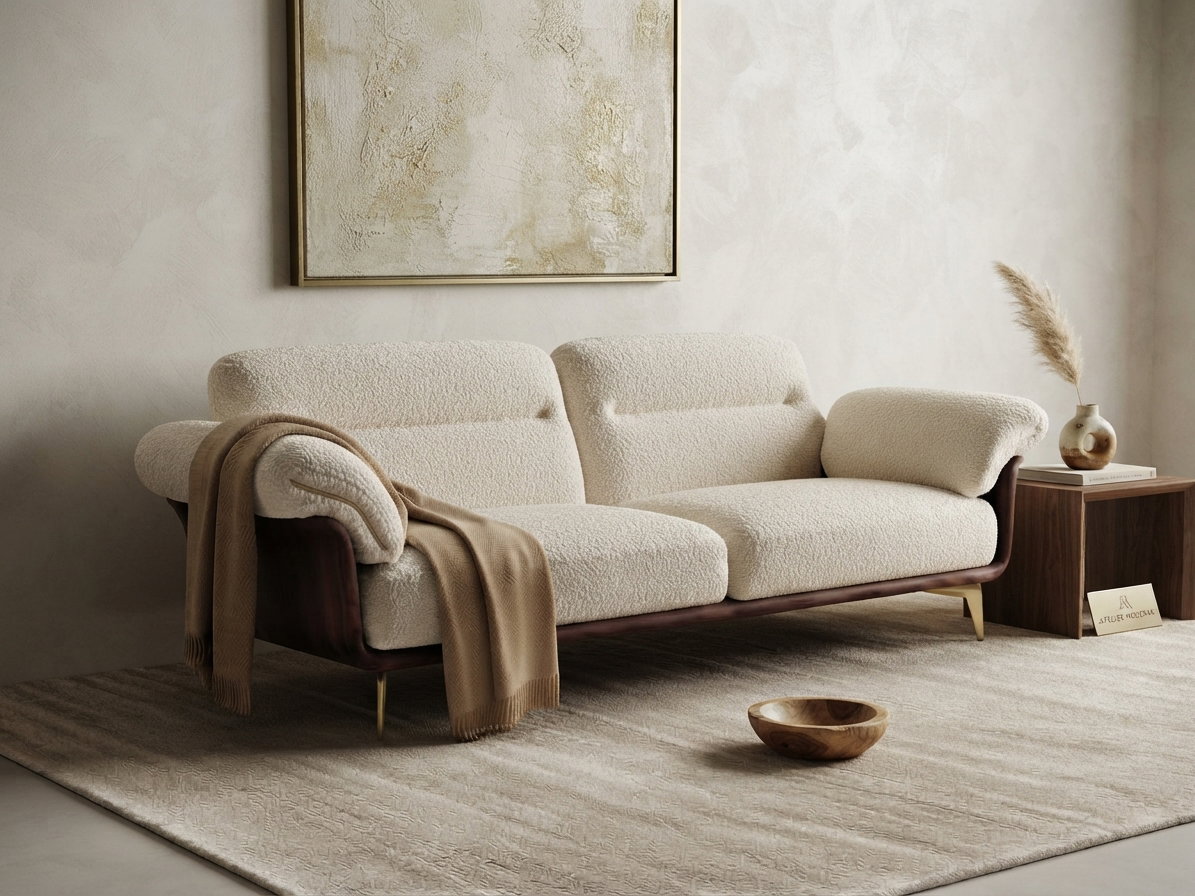
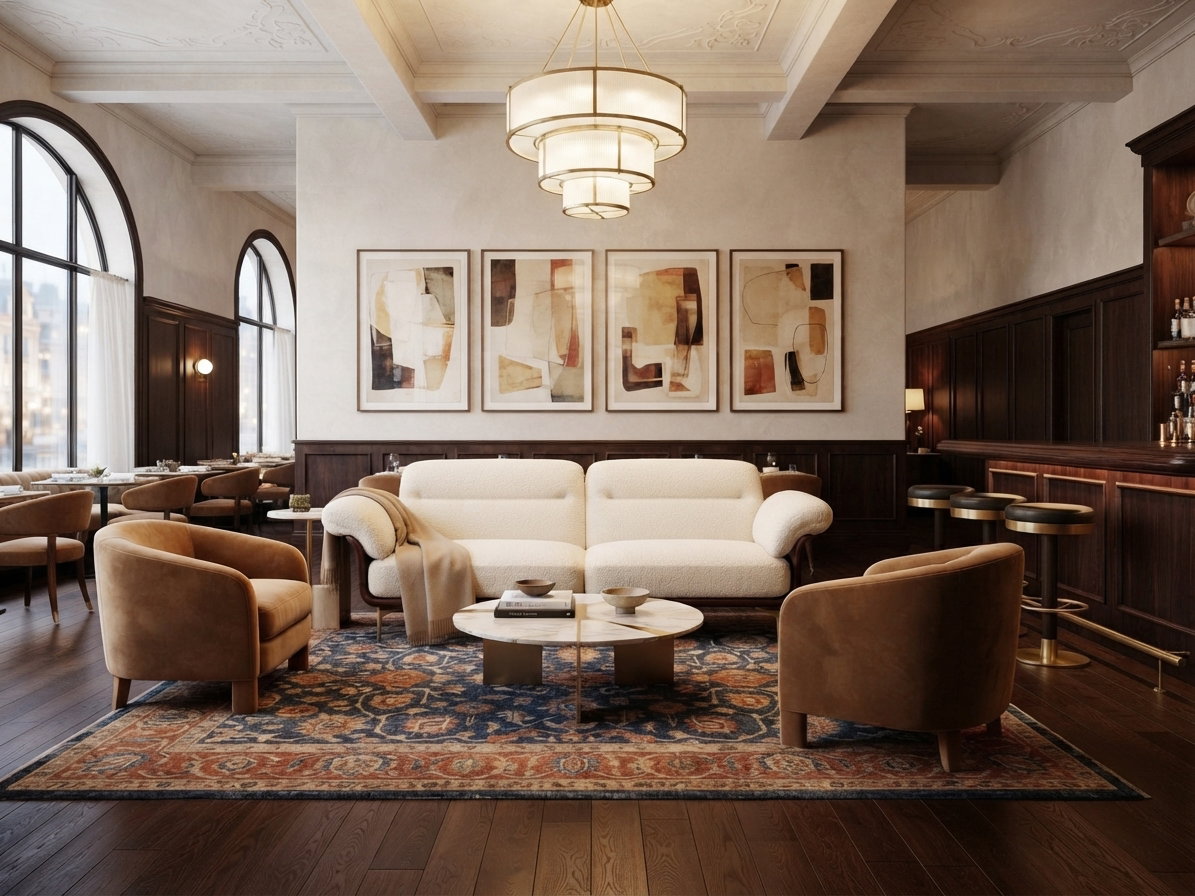
A restaurant lounge usually occupies the space between the entrance and the main dining area, or sits alongside a bar. It should feel distinct from the dining room without feeling disconnected. This separation can be achieved through flooring changes, ceiling treatments, lighting, or a shift in furniture type. Where dining rooms rely on upright chairs and dining tables, a lounge can introduce sofas, armchairs, and low tables that encourage guests to settle in. The lounge also serves a practical function, absorbing waiting guests during busy periods and providing a comfortable area for early arrivals or post-dinner drinks. For projects with specific dimensions and finish requirements, custom furniture services allow each piece to be adapted to the available space and the restaurant's overall material palette. The result should feel like a natural extension of the dining experience rather than a separate waiting area.
Restaurant Lounge Furniture: Placement and Proportions
Furniture placement in a restaurant lounge must balance comfort with circulation. Guests and staff need clear pathways between the entrance, bar, dining room, and service areas. A sofa positioned against a wall or in a corner can anchor the seating area without obstructing movement. Proportions are equally important. A sofa that is too large can dominate the lounge and restrict circulation, while one that is too small may fail to establish a comfortable seating zone. For many restaurant lounge applications, a sofa around 200–240 cm wide can provide a useful balance between seating capacity and space efficiency. A depth of approximately 85–95 cm allows comfortable seating while maintaining reasonable circulation. Seat height around 42–45 cm is generally suitable for lounge seating. The distance between the sofa and facing furniture should also allow comfortable conversation and movement. For more ideas on integrating furniture into hospitality interiors, see our related article on custom furniture for refined interiors.
Material Coordination: Wood, Bouclé, and Brass
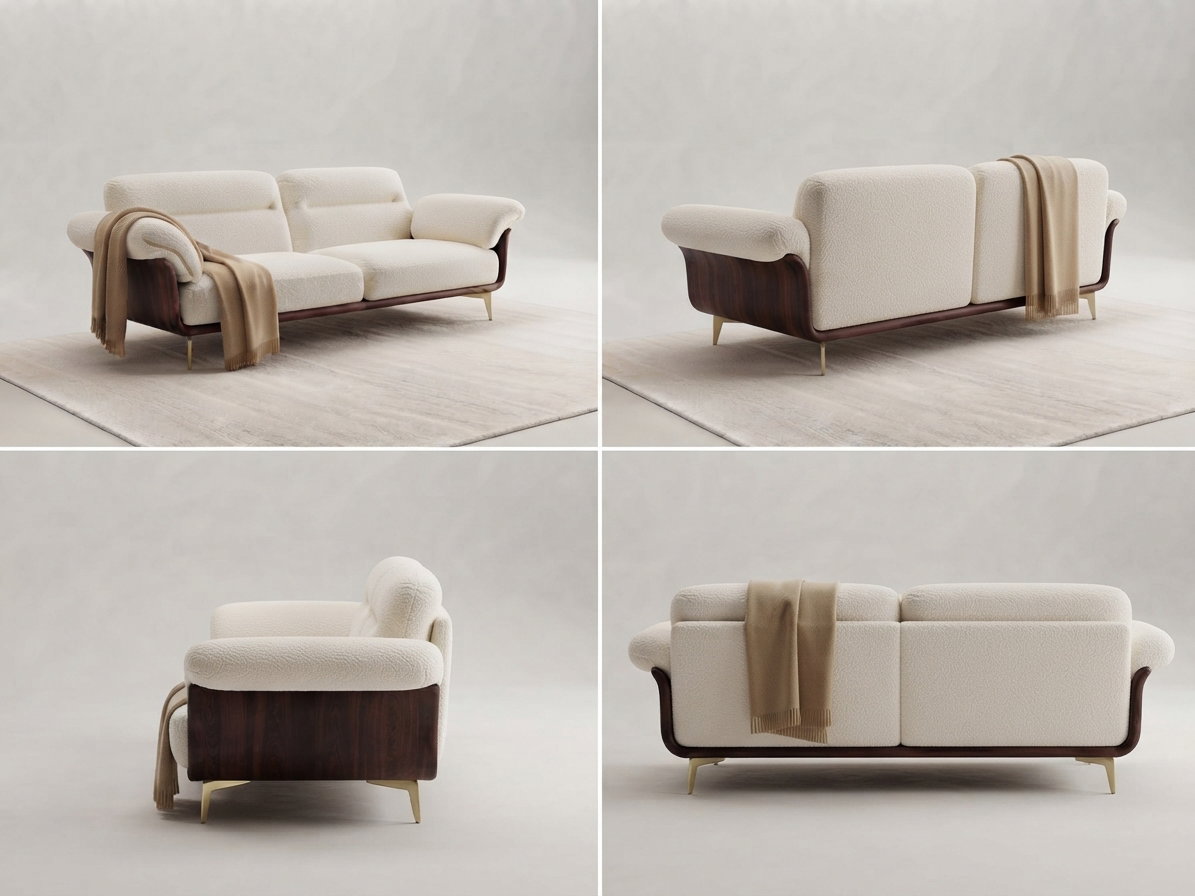
Restaurant furniture needs to combine visual appeal with materials appropriate for frequent use. Upholstery, frames, and hardware should be selected according to traffic, cleaning requirements, and the overall project specification. The featured sofa combines a dark wood frame, cream bouclé upholstery, and brass-colored legs. Together, these materials create a warm and refined appearance while keeping the overall design relatively simple. The dark wood frame can coordinate with timber flooring, wall paneling, cabinetry, or other dark wood elements. The cream bouclé creates a softer contrast and helps lighten the composition. Bouclé can be specified for hospitality applications when an appropriate commercial-grade fabric and performance treatment are selected. For restaurant projects, upholstery should be evaluated for stain resistance, cleaning requirements, abrasion performance, and expected frequency of use. The brass-colored legs provide a subtle metallic detail and can coordinate with warm lighting, decorative hardware, or other metal elements.
The Aria Lounge Sofa: Bouclé Design for Restaurant Interiors
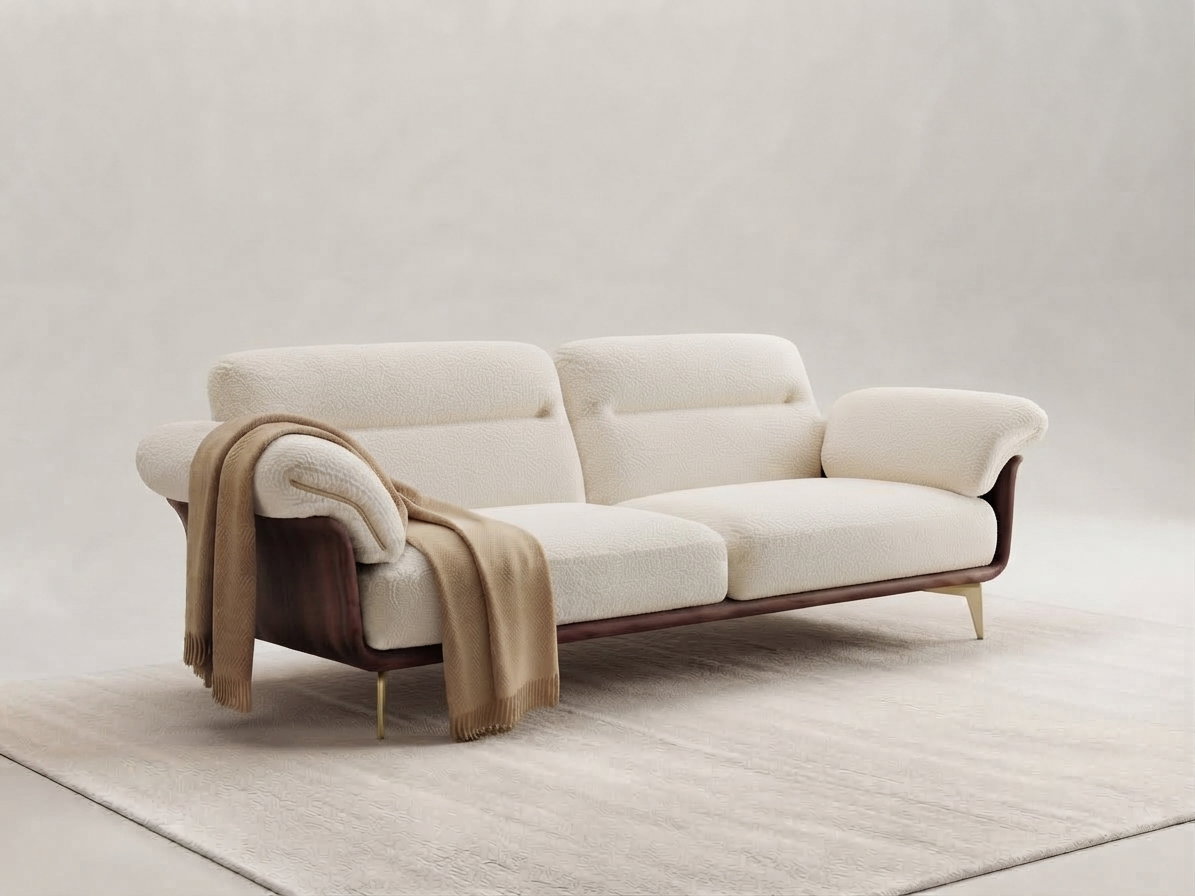
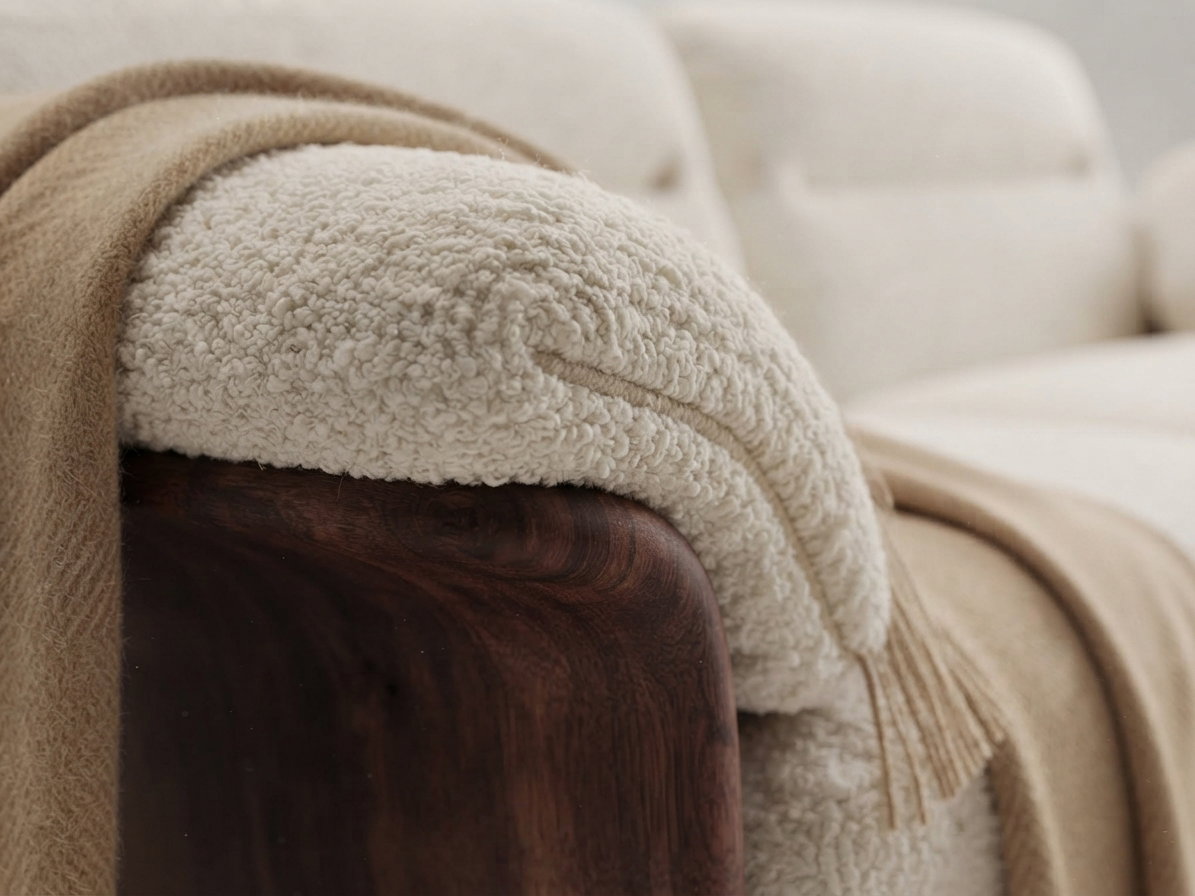
The featured design is a two-seat lounge sofa with a dark wood frame, cream bouclé upholstery, and brass-colored legs. Its rounded upholstery creates a soft, comfortable appearance, while the exposed wood frame gives the piece a more architectural character.
The sofa has three individual back sections with subtle horizontal detailing. The backrests and seat cushions are generously upholstered, creating a relaxed appearance suited to restaurant lounges, hotel lobbies, and other hospitality environments.
One of the most distinctive details is the curved arm design. The upholstered arm extends outward from the wood frame, creating a soft wing-like profile. The visible wood structure keeps the design connected to a sophisticated hospitality interior.
Featured Design
Design: Aria Lounge Sofa
Type: Three-seat custom lounge sofa
Materials: Dark wood frame, cream bouclé upholstery, brass-colored legs
Approx. Dimensions: W 220 × D 90 × H 80 cm (estimated)
Finish: Natural or dark-stained wood, cream bouclé, brushed brass
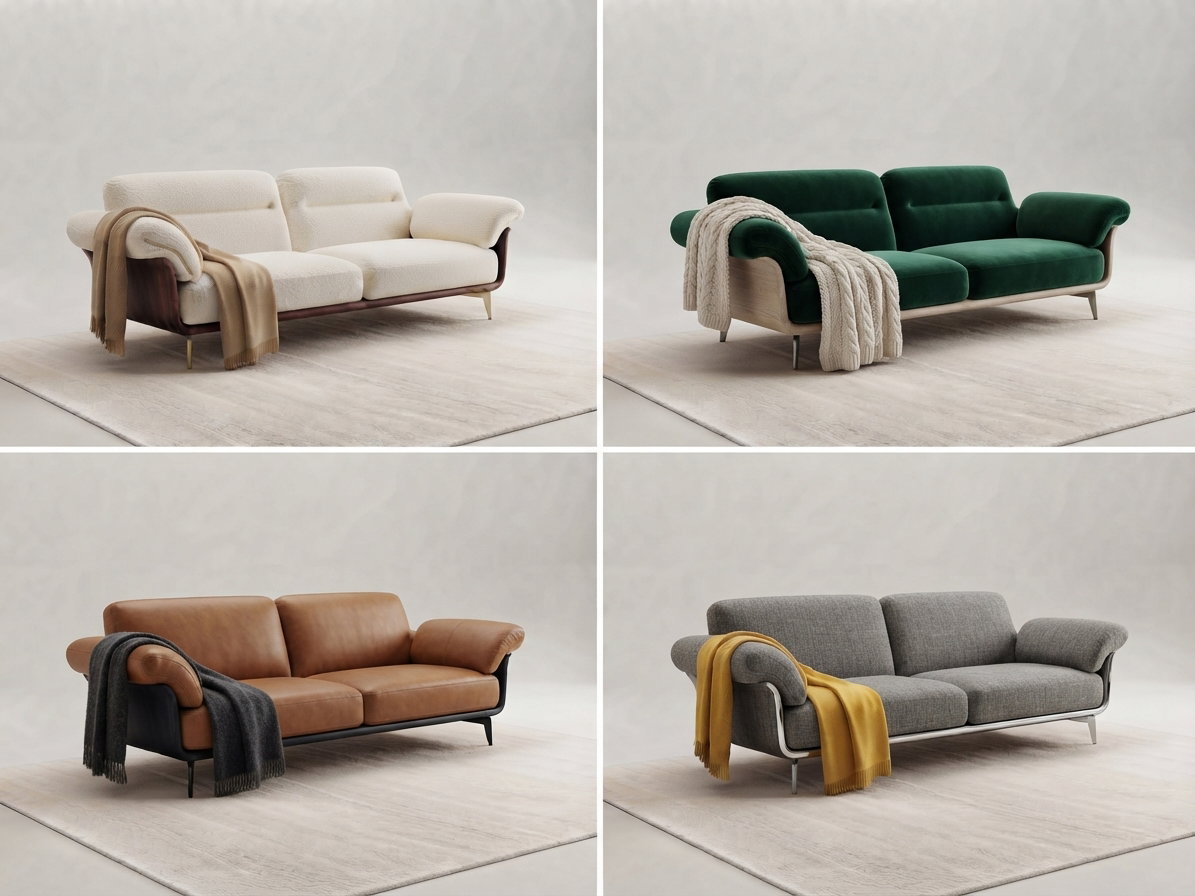
Customization: Dimensions, wood finish, upholstery fabric and color, leg finish, seat configuration
Suggested Applications: Restaurant lounges, hotel lobbies, boutique hotel suites, luxury residences
The design can be adapted to different hospitality and residential requirements. For a broader overview, see our main article on custom furniture for hospitality projects. You can also explore more custom furniture designs for additional ideas.
Customization for Restaurant Projects
Restaurant projects rarely use furniture exactly as it comes from a standard catalog. Dimensions, materials, upholstery, colors, and construction details often need to coordinate with the architectural design and project specifications.
The featured sofa can be adjusted in width, depth, and seat configuration. A two-seat version can be developed for smaller lounge areas, while longer configurations can be produced for larger spaces. The wood frame can be specified in different finishes, while upholstery can be selected according to the project's color palette and performance requirements. The metal legs can also be customized in brass, bronze, black, nickel, or other finishes.
For larger restaurant developments, furniture specifications also need to consider quantity, repeatability, approved materials, quality control, and production consistency. Custom furniture manufacturing allows the same design to be produced across multiple seating areas while maintaining consistent dimensions, finishes, upholstery, and construction details.
Allline Hospitality & Interiors works with designers, developers, contractors, and FF&E procurement teams to translate project requirements into production drawings and finished furniture.
Lighting and Atmosphere
Lighting plays an important role in how restaurant lounge furniture is perceived. Ambient lighting from ceiling fixtures or wall sconces provides general illumination, while table lamps, floor lamps, or decorative lighting can add warmth at seating level.
The cream bouclé upholstery works particularly well with soft, indirect lighting. Its textured surface catches light subtly and gives the upholstery greater visual depth. The dark wood frame creates contrast, while the brass-colored legs provide small highlights as the lighting changes.
Warm color temperatures can work well for evening dining and lounge environments. Dimming capability is also useful in restaurants that transition between daytime and evening service.
Durability and Maintenance in Restaurant Settings
Restaurant furniture must withstand frequent use, movement, accidental spills, and regular cleaning. Material selection should therefore be considered as part of the overall furniture specification.
For the featured sofa, the upholstery should be selected according to the project's hospitality requirements. Commercial-grade bouclé or another suitable performance fabric can be considered where the project requires greater resistance to staining, abrasion, and frequent cleaning.The upholstery should be maintained according to the fabric manufacturer's recommendations. The wood frame can generally be maintained with a dry or slightly damp cloth, depending on the selected finish. Protective pads beneath the legs can also help reduce contact with hard flooring.
Conclusion: Custom Furniture for Restaurant Lounge Design
A successful restaurant lounge needs to feel comfortable, visually connected to the overall interior, and practical enough for daily hospitality use. The right combination of proportions, circulation, materials, upholstery, lighting, and furniture placement can transform a waiting area into a meaningful part of the guest experience.
The Aria Lounge Sofa demonstrates how a single custom furniture design can establish the character of a restaurant lounge. Its cream bouclé upholstery creates softness, the dark wood frame adds warmth and structure, and the brass-colored legs introduce a subtle decorative detail.
Because the design can be adapted in dimensions, finishes, upholstery, and configuration, it can be developed for different restaurant, hotel, residential, and hospitality requirements. If you are planning a restaurant, hotel, or hospitality project and require furniture developed to specific dimensions, materials, and quantities, discuss your project with Allline to explore a custom furniture solution.
