Custom Hospitality Seating for Hotels & Restaurants: 6 Decisions That Decide How Long It Lasts
By Allline Hospitality & Interiors | Custom Furniture Manufacturer in Foshan, China
See Our Factory Capabilities →
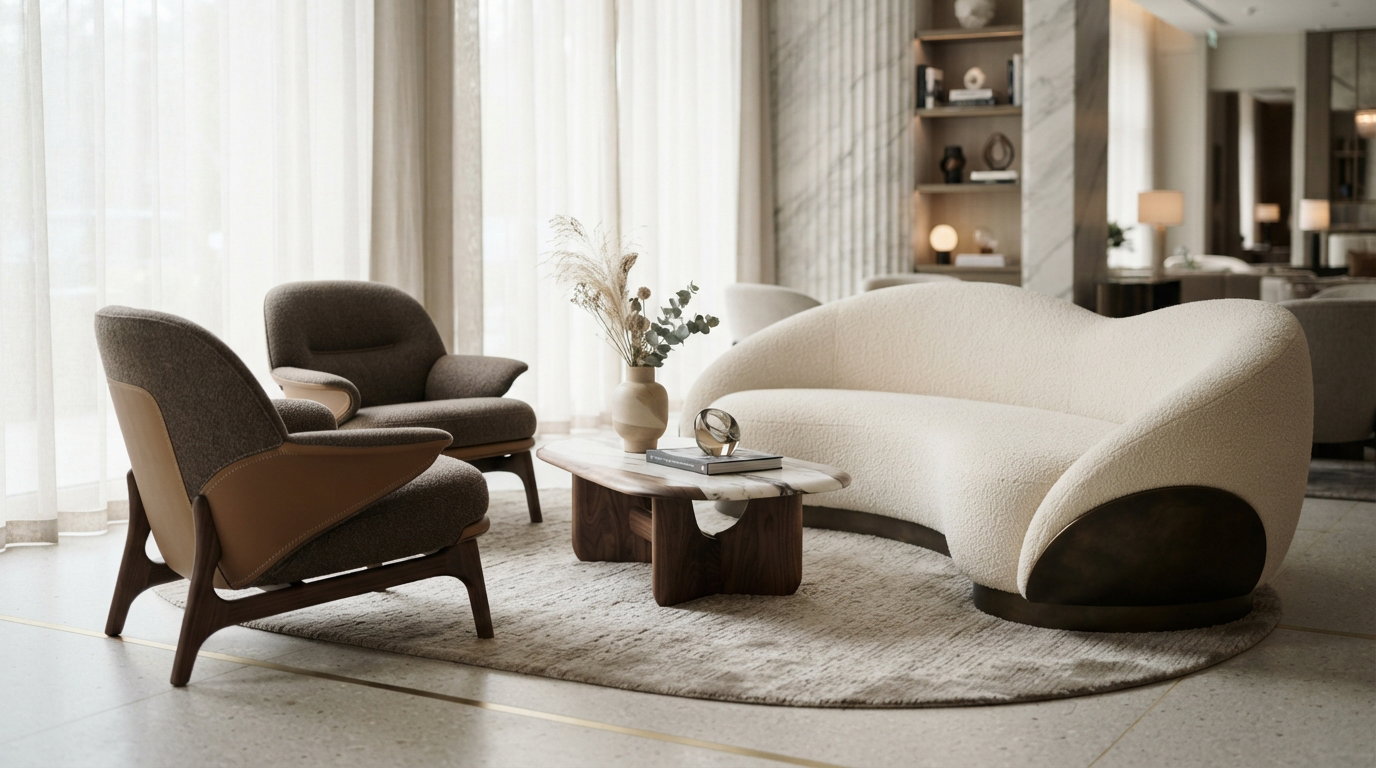
Seating is the hardest-working furniture in any hospitality project. A lobby sofa may be used by hundreds of guests a week. A restaurant chair is pulled, dragged, sat on and cleaned every single day. Yet seating is often chosen from a photograph.
Looks matter, of course. But whether a piece still looks new after two years depends mostly on what you cannot see: the frame, the foam, the fabric and the small construction details. This guide walks through six decisions that shape custom hospitality seating for hotel FF&E projects, restaurants, lounges and residential developments. It is written in plain language, so you know what to ask for, whether you are a developer, designer, contractor or FF&E procurement manager.
Where Seating Works Hardest
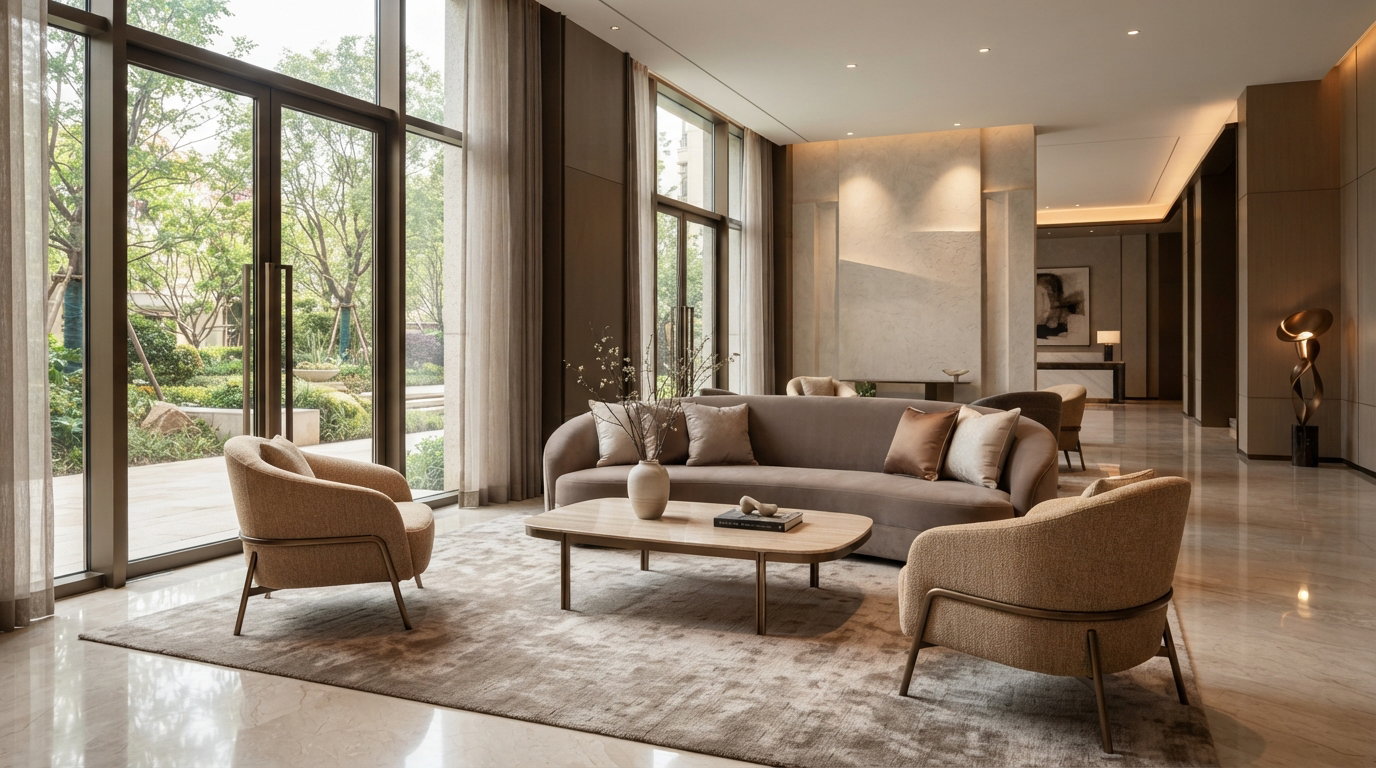
Seating is a major part of any hotel FF&E package, and not all of it faces the same demands:
- Hotel lobbies and lounges: constant use, long hours, many different guests. Hotel lobby lounge seating and other durable furniture for hotel lobbies has to stay comfortable and clean-looking despite heavy traffic.
- Restaurants and bars: spills, frequent cleaning and chairs that move all day. Custom made restaurant furniture needs surfaces that are easy to wipe and joints that do not loosen.
- Guestrooms: quieter use, but the same piece is repeated across dozens or hundreds of rooms.
- Villas and residences: lighter use, so comfort and appearance can lead.
Knowing which of these your piece belongs to is the starting point for every decision below.
Decision 1: The Frame
The frame is the skeleton, and it is the part guests never see. A good frame is made of dry, stable hardwood or reinforced plywood, with joints strengthened where the weight lands: seat corners, arms and legs.
A weak frame does not fail on day one. It starts to creak after a few months, then loosens, and then the whole piece has to be replaced, which is a costly surprise in any FF&E budget. For custom metal hotel furniture, such as metal-framed chairs or bar stools, the same logic applies to welds and the finish that protects them.
Ask: What is the frame made of, and how are the joints reinforced?
Decision 2: Foam and Comfort
Comfort in a hotel is different from comfort at home. A lobby seat has to feel good for twenty minutes and still hold its shape after thousands of sittings. Foam that is too soft looks tired quickly. Foam that is too hard looks elegant and feels like a waiting room.
Good manufacturers choose the foam and the layers for the way the piece will be used. A lounge chair for a long conversation is different from a dining chair for a quick meal.
The only reliable test is physical. Sit on the sample for ten minutes, not ten seconds. This is why sampling matters so much, as we explain in our guide to designing a luxury hotel lobby lounge.
Ask: Which foam is used, and can I test the sample before production?
Decision 3: Fabric and Leather
Fabric is where beauty and practicality meet, and where most seating problems begin. A material that looks perfect in a sample book may mark easily, fade near windows or wear through on the arms.
For hospitality, look for commercial-grade fabrics with a clear rub-test rating, good color fastness and easy cleaning. Restaurants often benefit from performance fabrics that resist stains. For leather, check how it will age: some leathers gain character with use, others simply look worn.
Always match the material to the place. A pale velvet in a villa living room is a good choice. In a busy restaurant it is a maintenance problem.
Ask: Is this material rated for commercial use, and how is it cleaned?
Decision 4: Details That Show Wear First
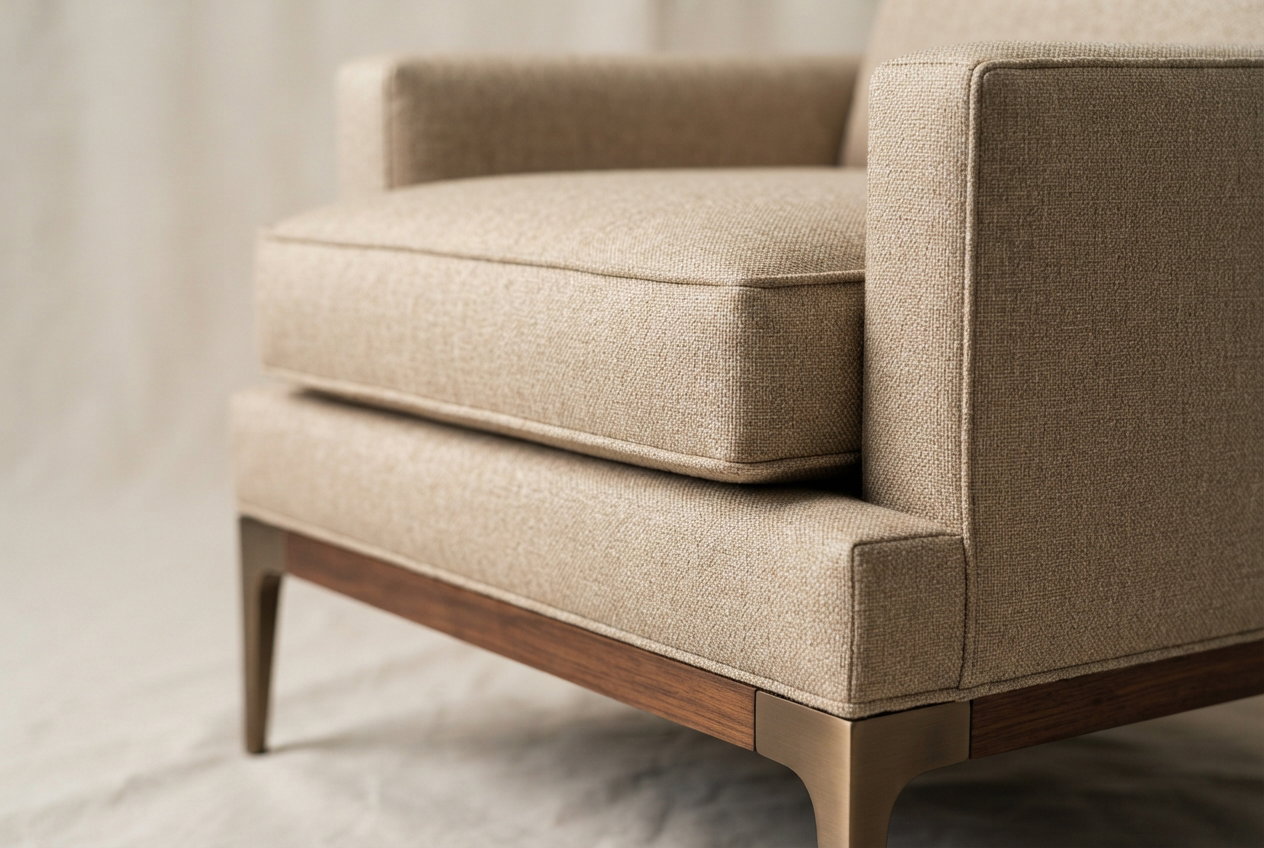
Wear appears in the details. Edges, piping, stitching, corners and legs take the most stress. Well-made custom hospitality seating protects them with tight, even stitching, firm corners and legs designed to resist knocks and protect floors.
Details also bring the design to life: a bronze trim, a wood base, a slim metal leg. These elements make a piece feel high-end, so they need the same attention as the structure. Our article on custom upholstery and bespoke joinery shows how these crafts come together in one piece.
Ask: Which parts will wear first, and how are they protected?
Decision 5: Safety and Brand Standards
Fire safety requirements for upholstered furniture vary by country, and many hotel brands add their own standards. These requirements influence the foam, the fabric and even the lining.
The simple rule: tell your manufacturer the destination country and any brand standards at the start of the project, and write them into the FF&E specification. Changing the specification later is slow and expensive, and in the worst case it means starting again with new samples.
This is also where a professional hospitality furniture manufacturer learns trust. They will ask about these requirements before quoting, not after production.
Ask: Which standards does this piece need to meet, and has the specification been checked against them?
Decision 6: Consistency Across the Whole Order
One beautiful chair is easy. Two hundred identical chairs are the real challenge.
Consistency comes from three habits:
- An approved sample that becomes the reference for the entire order.
- One fabric batch ordered for the whole project, so colors match from the first piece to the last.
- Spare pieces and spare fabric, kept for repairs and future replacements.
This is a core principle in hospitality furniture procurement and FF&E procurement in general. The project is judged by the overall result, not by the best individual piece. For more on how to manage a full package, see our guide to furniture procurement for hotels and villas.
Ask: How will you keep color and construction identical across the full quantity?
Seating Across the Whole Project
The same six decisions apply to every space, with different priorities:
- Restaurants and bars: durability and cleaning first. See our article on restaurant lounge sofa design.
- Hotel lobbies: comfort, presence and long-term appearance. Custom seating for hotels and hospitality lounge furniture should look as good in year three as on opening day.
- Guestrooms: consistency and efficient production, together with other custom hotel room furniture such as beds, nightstands and desks.
- Villas: refined materials and comfort, as in our guide to luxury villa sofas.
Contemporary hospitality furniture often mixes all of these in one project, so it helps when a single FF&E supplier manages them under the same quality standard.
Why Where It Is Made Matters
Hospitality seating combines wood, metal, foam, fabric, leather and stone. Foshan, in Guangdong, is one of China's main furniture manufacturing regions, and these materials and skilled workshops are close together. For custom hospitality furniture manufacturing in China, that makes coordination faster and easier to control, which is why many buyers choose Foshan for FF&E procurement in China.
Location alone does not guarantee quality, though. The real test is the factory's process, which we cover in our full guide to custom made furniture from China.
Six Questions to Ask Before You Order Seating
- What is the frame made of, and how are the joints reinforced?
- Which foam is used, and can I test the sample first?
- Is the fabric or leather rated for commercial use?
- Which parts will wear first, and how are they protected?
- Which safety and brand standards apply to this piece?
- How will you keep every piece identical across the order?
A team with real hospitality experience will answer all of these clearly, as we explain in why skilled teams matter in hospitality projects.
About Allline
Allline Hospitality & Interiors is a hotel FF&E supplier specializing in custom furniture manufacturing. Based in Foshan, we work directly with property developers, designers and contractors on hotels, restaurants, villas and apartment developments, from the first drawing to the final shipment. Seating is a key part of every FF&E package we deliver.
Ready to Specify Your Seating?
If you are planning seating for a hotel, restaurant, lounge or residential project, the easiest first step is to share your drawings, references and FF&E quantities with our team. We will review them, point out anything that needs clarification and recommend the right construction for how each piece will be used. You can also see everything we manufacture on our custom furniture services.
